The human hand: what grip, pinch and dexterity reveal
Read the paper →The human hand is one of evolution’s most quietly remarkable instruments. It can crush a walnut and thread a needle, swing an axe and play a nocturne. That combination of raw power and delicate precision is, in this pairing, considered close to unique among living primates — and how it came to be is one of the central questions of human evolution. Two large studies, run as part of the same public-science project at the London Science Museum, set out to measure that hand at scale: first its grip strength, then its pinch strength and dexterity. Together they tested more than 1,200 people to ask a deceptively simple question — what actually shapes how strong and how precise a human hand is?
The question
The hand is essential to how modern humans interact with the world, as it was for our extinct relatives. Its enhanced dexterity is widely thought to have evolved through two intertwined pressures: adaptation to walking upright, which freed the hands from locomotion, and the increasingly complex production and use of stone tools. A long, powerful thumb and relatively short fingers make possible the forceful precision grips and power-squeeze grips considered hallmarks of the human hand — and grip strength was likely a primary factor in the efficiency of early stone-tool use.
Humans are also unusual in the strength of their population-level handedness: roughly 85–90% of people are right-handed regardless of region or ethnicity. Researchers distinguish two related ideas here. Hand dominance asymmetry is simply the gap between a person’s dominant and non-dominant hand, ignoring which side is which. Directional asymmetry (DA) is a population-level bias in a particular direction — one side, right or left, being consistently stronger or more dexterous. This laterality is thought to be tied to the lateralisation of the human brain for language and other complex cognitive functions, which makes the hand a window onto how our brains, as well as our bodies, evolved.
But hand performance is not fixed by anatomy alone. Hand size and shape vary widely across people; so does daily use. Grip strength is routinely used in clinical and sports medicine as a marker of overall muscle strength — and even of brain health, since its decline tracks declines in cognitive function late in life. Yet most previous studies looked at narrow slices: one occupation, one age band, one population. The two studies here set out to test the major factors together, in a large and deliberately heterogeneous sample, so the link between hand form and function could be seen whole.
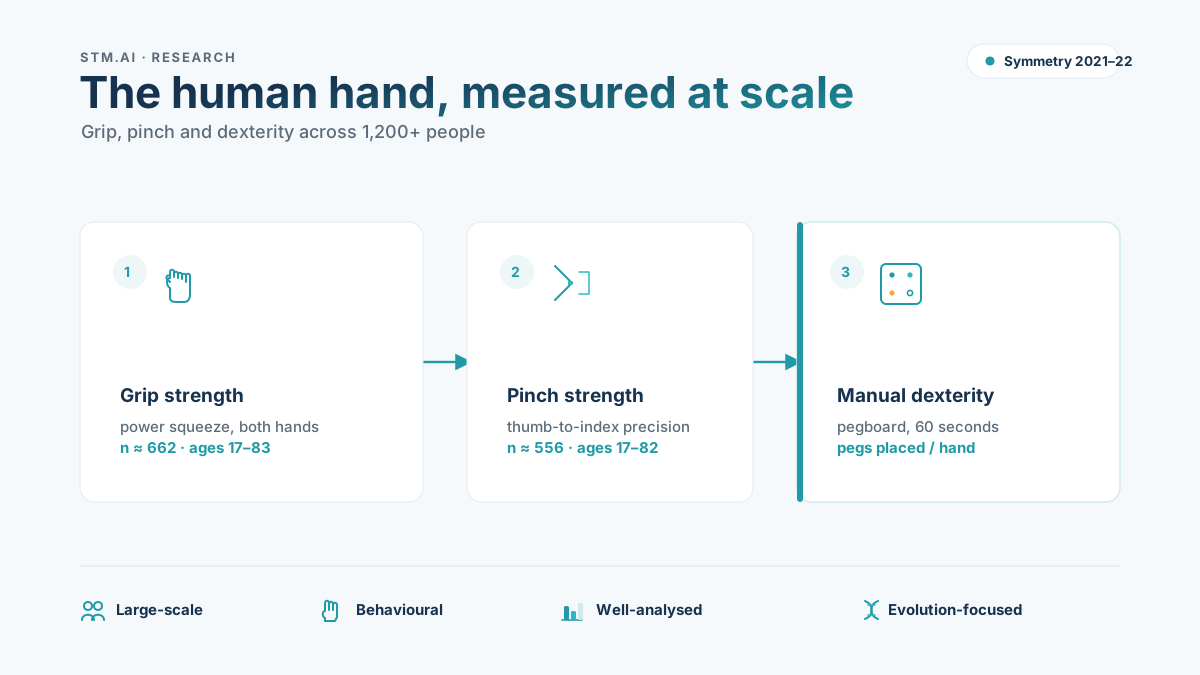
Figure 1. The human hand, measured at scale: grip, pinch, and dexterity.
What we measured
Both studies drew on Me, Human, a three-month public engagement and citizen-science collaboration hosted by Live Science at the London Science Museum in 2019. More than 1,600 visitors took part in a battery of motor and cognitive experiments; because volunteers came and went freely, with no selection criteria and a steady stream of international tourists, the result was an unusually diverse cross-section of people. Everyone first completed a short demographic questionnaire — date of birth, sex, handedness for writing — and gave informed consent. Anyone reporting a hand or arm injury in the previous twelve months was excluded.
The first study measured grip strength in 662 adults aged 17 to 83 (the hand is fully developed by 17). Using a Jamar dynamometer, each participant squeezed as hard as they could, twice per hand, with the average of both hands recorded. Hand size and shape were captured from flatbed scans: hand width and length were measured precisely, and their ratio used to classify hands as relatively “wide” or “long”. The team tested the effects of sex, age, hand-dominance and handedness asymmetry, hand shape, occupation, and the practice of sports and musical instruments involving the hands.
The second study measured pinch strength and manual dexterity in 556 adults aged 17 to 82. Pad-to-pad pinch strength — force generated between the pad of the thumb and the pad of the index finger, without the palm — was recorded with a Jamar pinch gauge. Dexterity was assessed with a pegboard test: how many coloured pegs a participant could correctly place in 60 seconds, with each hand separately. This study added the thumb-index finger length ratio to the list of anatomical factors, alongside sex, age, asymmetry, hand shape, occupation, sport and music.
What turns these measurements into findings is the quantitative analysis — and this is where stm.ai’s contribution sits. Across both studies, stm.ai’s Cosmin Stamate was part of the team from conception and design through data acquisition, contributing the data-science side of a collaboration that spanned anthropology, psychology and biomechanics. The analyses had to handle a genuinely messy real-world dataset: many interacting variables, uneven group sizes, and the recurring need to separate the effect of sheer hand size from everything else. The teams checked each variable’s distribution, accounted for hand area by analysing relative as well as absolute strength, fitted linear models for grip and used non-parametric tests (with appropriate corrections for multiple comparisons) for pinch and dexterity — the careful statistical scaffolding that lets a large, noisy sample yield trustworthy conclusions.
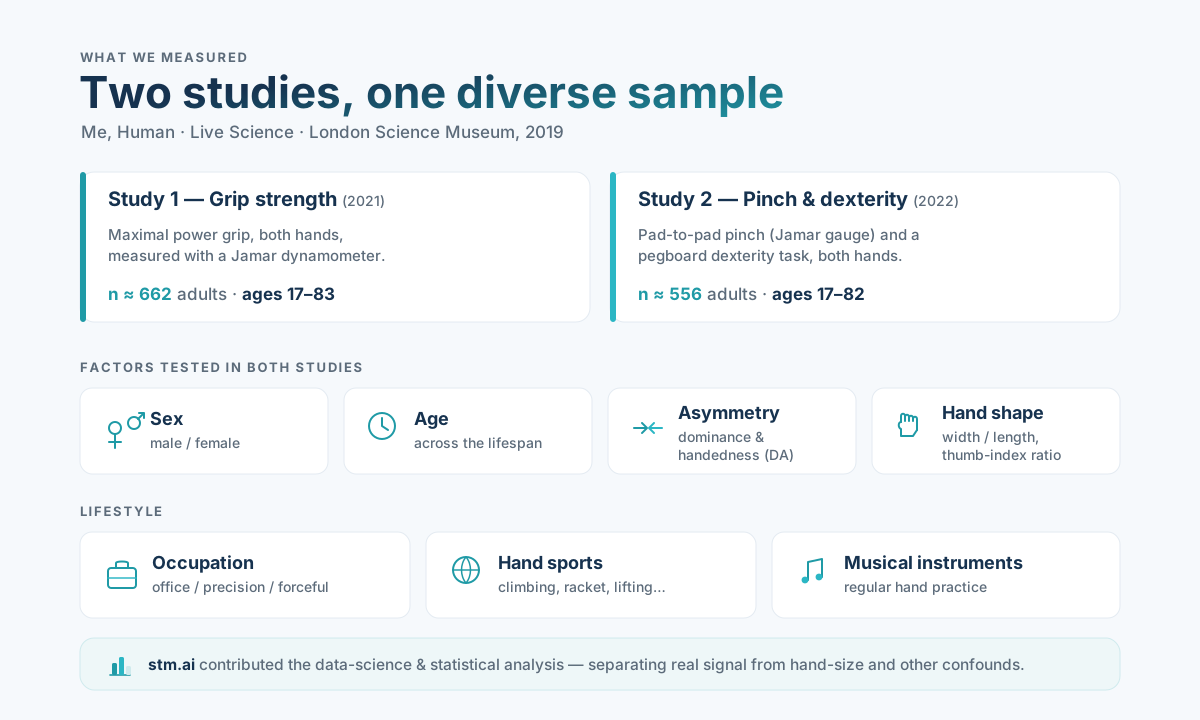
Figure 2. Two cross-sectional studies and the factors they tested.
What we found
Grip strength (first study). Males were significantly stronger than females — and stayed stronger even after correcting for hand size, so the gap is not simply a matter of bigger hands. Both sexes were stronger in their dominant hand, but the asymmetry was modest: about 5.5% for males and 4.2% for females on average, smaller than the roughly 10% often cited in earlier work. Crucially, handedness made no difference to grip strength: right- and left-handers did not differ, so grip strength was not an indicator of directional asymmetry. Hand shape and age mattered more for women. Grip declined significantly with age in females but not significantly in males, who showed greater variability. People with wider hands were stronger than those with longer hands — significantly so for the non-dominant hand in both sexes, and for both hands in females. That shape effect was stronger in older women: among younger women, hand shape barely mattered, but older women with wider hands were notably stronger than older women with longer hands. Lifestyle left its mark too: frequent hand sports raised non-dominant grip strength in both sexes, while occupation mattered only for men — those in forceful manual labour had stronger non-dominant hands than office workers. Playing a musical instrument had no effect on grip.
Pinch strength and dexterity (second study). Here the pattern was different in revealing ways. Males again had significantly stronger pinch — in both hands — but, unlike with power grip, there was no dominant-versus-non-dominant asymmetry for pinch strength in either sex. Females were significantly more dexterous than males, in both hands, on the pegboard task. For dexterity there was a clear dominance asymmetry in both sexes — the dominant hand placed more pegs — and it held across every age group. The two forms of directional asymmetry pointed in opposite directions: right-handed males had significantly stronger pinch than left-handed males (in both hands), whereas for dexterity, left-handed females were more dexterous than right-handed females, and only in the non-dominant hand. Anatomy told a clean story: people with wider hands had stronger pinch (in both sexes), but wider hands were not more precise — width buys strength, not dexterity. And the thumb-index finger ratio had no effect on either pinch strength or dexterity, a notable null result given how often that ratio is invoked in evolutionary arguments. As for lifestyle, the standout finding was musical: women who played a musical instrument were significantly more dexterous in both hands than women who did not, with no equivalent effect in men. Neither occupation nor sport significantly affected pinch or dexterity in this study, and stronger people were not generally more dexterous — a link between pinch strength and dexterity appeared only in men’s dominant hand.
Taken together, the two studies show that hand function is shaped by a combination of sex, age, anatomy and life experience — and that strength and precision do not march in step. The factors that build a powerful grip are not the same as those that build a nimble one.
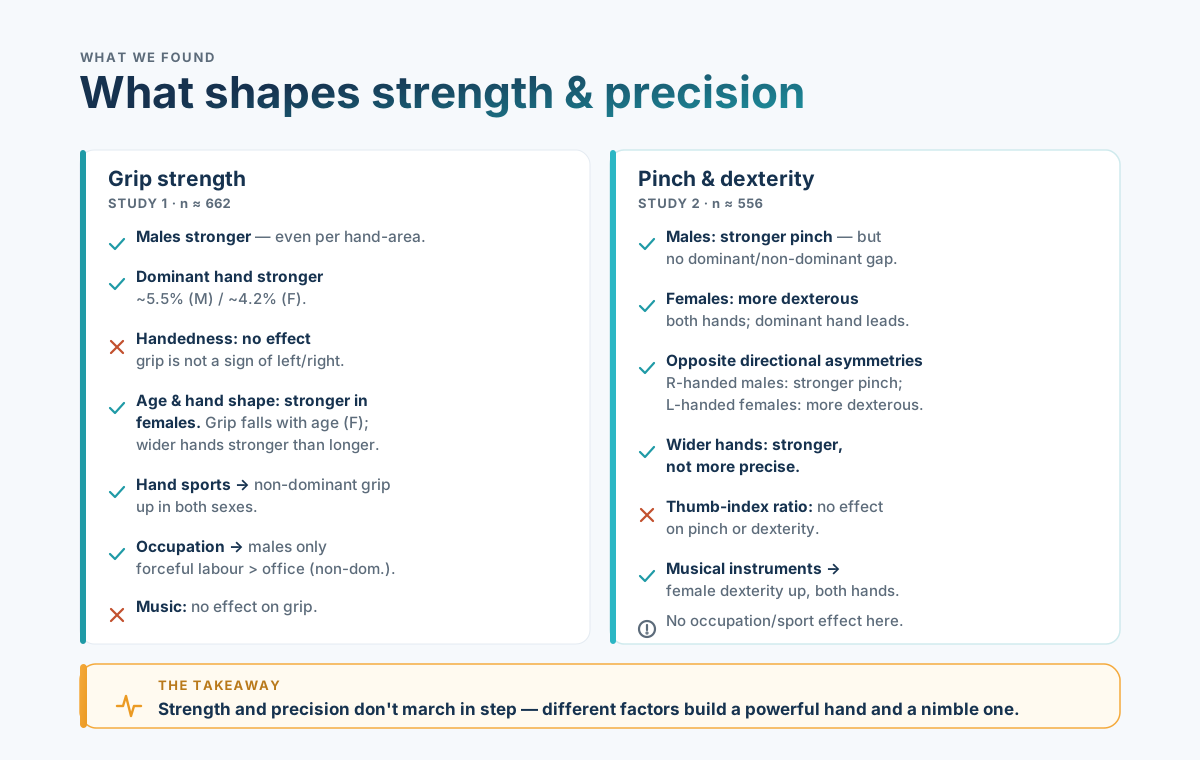
Figure 3. What drives variation in hand function.
Why it matters
The deepest payoff is evolutionary. Both hands matter for the activities that shaped our lineage — tool-making and use, carrying, hunting, climbing — so weak hands would have been selected against. The finding that wider hands are stronger suggests that, if the same relationship held in the past, there may have been selection toward proportionally wider hands and relatively shorter fingers, consistent with how hominin hand proportions are known to have changed. At the same time, the studies counsel humility: the thumb-index ratio, long treated as a proxy for dexterity in fossil hominins, showed no effect on precision in living people, and hand width — rarely measured in fossils because it depends on soft tissue and well-preserved bone — turned out to be a stronger predictor of pinch grip. Reading the modern hand carefully, in other words, sharpens what we can and cannot infer from ancient ones. And by measuring both hands rather than only the dominant one, the work offers a richer picture of human laterality and its links to the lateralised brain.
There is also a clinical and practical thread. Grip strength is a recognised marker of muscle strength and even brain health, and the result that physical activity attenuates age-related grip loss — especially in women, whose strength and hand-shape effects were most age-sensitive — speaks directly to healthy ageing. The strong, size-corrected sex differences and the role of hand width also matter for ergonomics, where tools and devices are still too often designed around a single “average” hand.
For stm.ai, these studies illustrate a particular kind of value: what becomes visible when a large, well-analysed behavioural dataset is treated with statistical care. Public-science settings like Me, Human can gather human-behaviour data at a scale and diversity that conventional lab studies rarely reach — but that data is only as good as the analysis that turns thousands of noisy measurements into defensible conclusions. Contributing the data-science and quantitative analysis to collaborations like this is core to how stm.ai works: separating real signal from confound, respecting what the numbers do and do not support, and letting honest, carefully-bounded findings stand on their own. The human hand, measured at scale and read with care, turns out to have a great deal to say.
A. Bardo, K. Town, T.L. Kivell, G. Donati, H. Ballieux, C. Stamate, T. Edginton, G.S. Forrester — “The Precision of the Human Hand: Variability in Pinch Strength and Manual Dexterity”, Symmetry 14(1), 71 (2022). Read the paper.
A. Bardo, T.L. Kivell, K. Town, G. Donati, H. Ballieux, C. Stamate, T. Edginton, G.S. Forrester — “Get a Grip: Variation in Human Hand Grip Strength and Implications for Human Evolution”, Symmetry 13(7), 1142 (2021). Read the paper.